John Barnes - LPL Financial Planner

(323) 306-7024

Investment

How Stocks Work

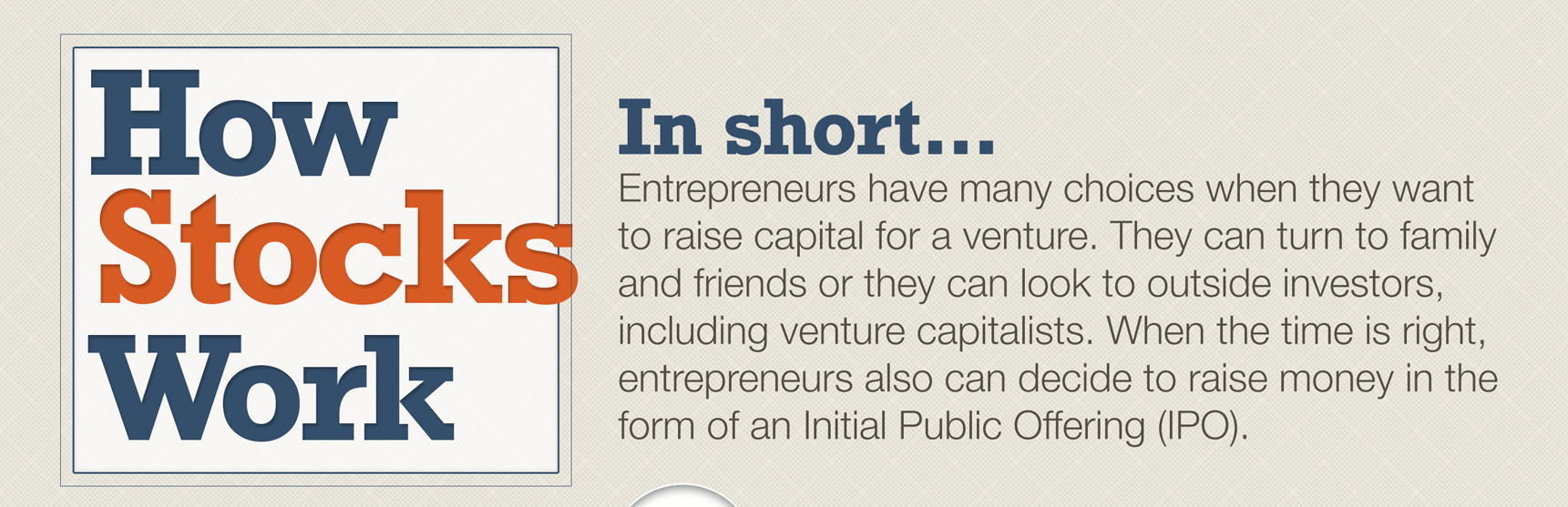
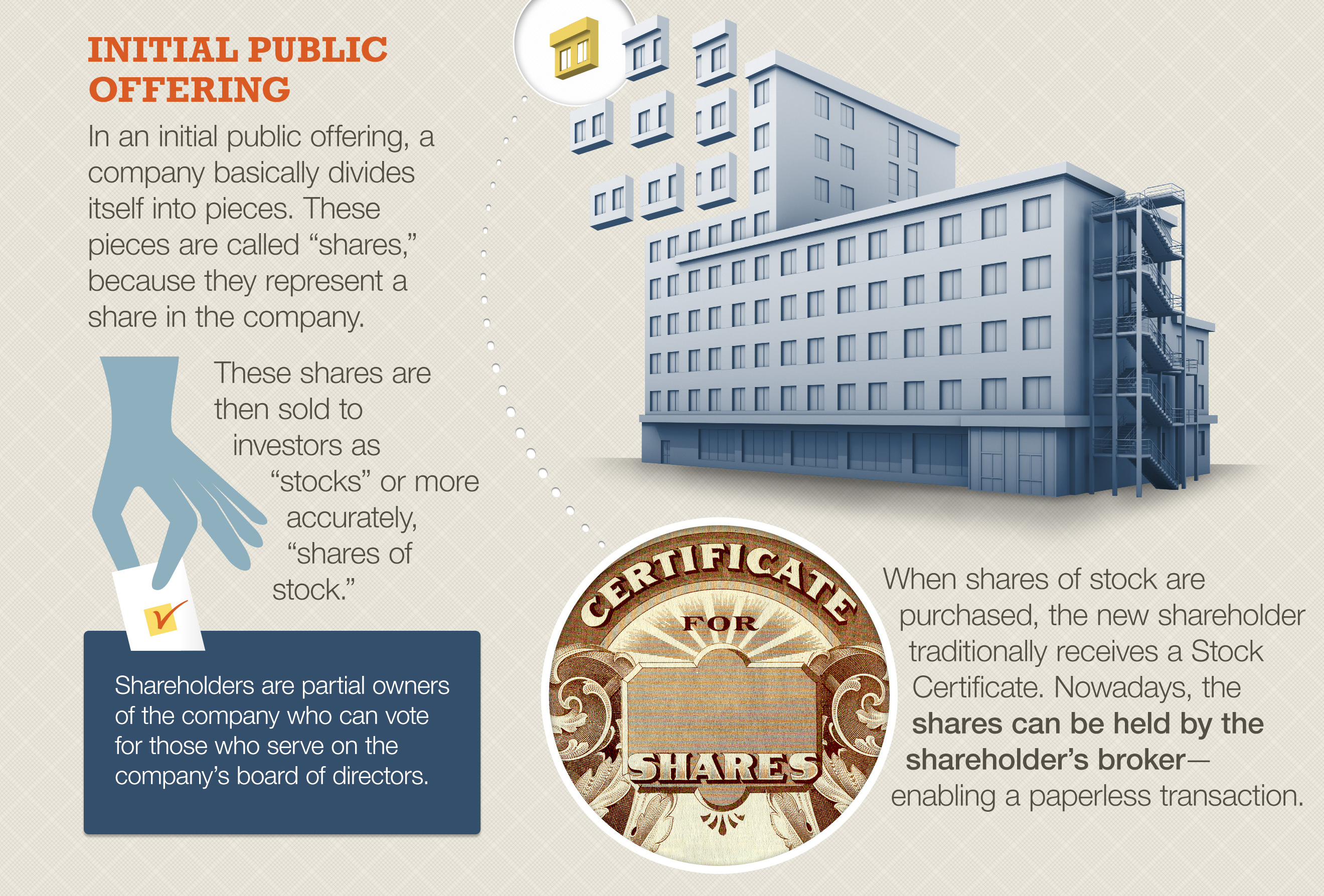
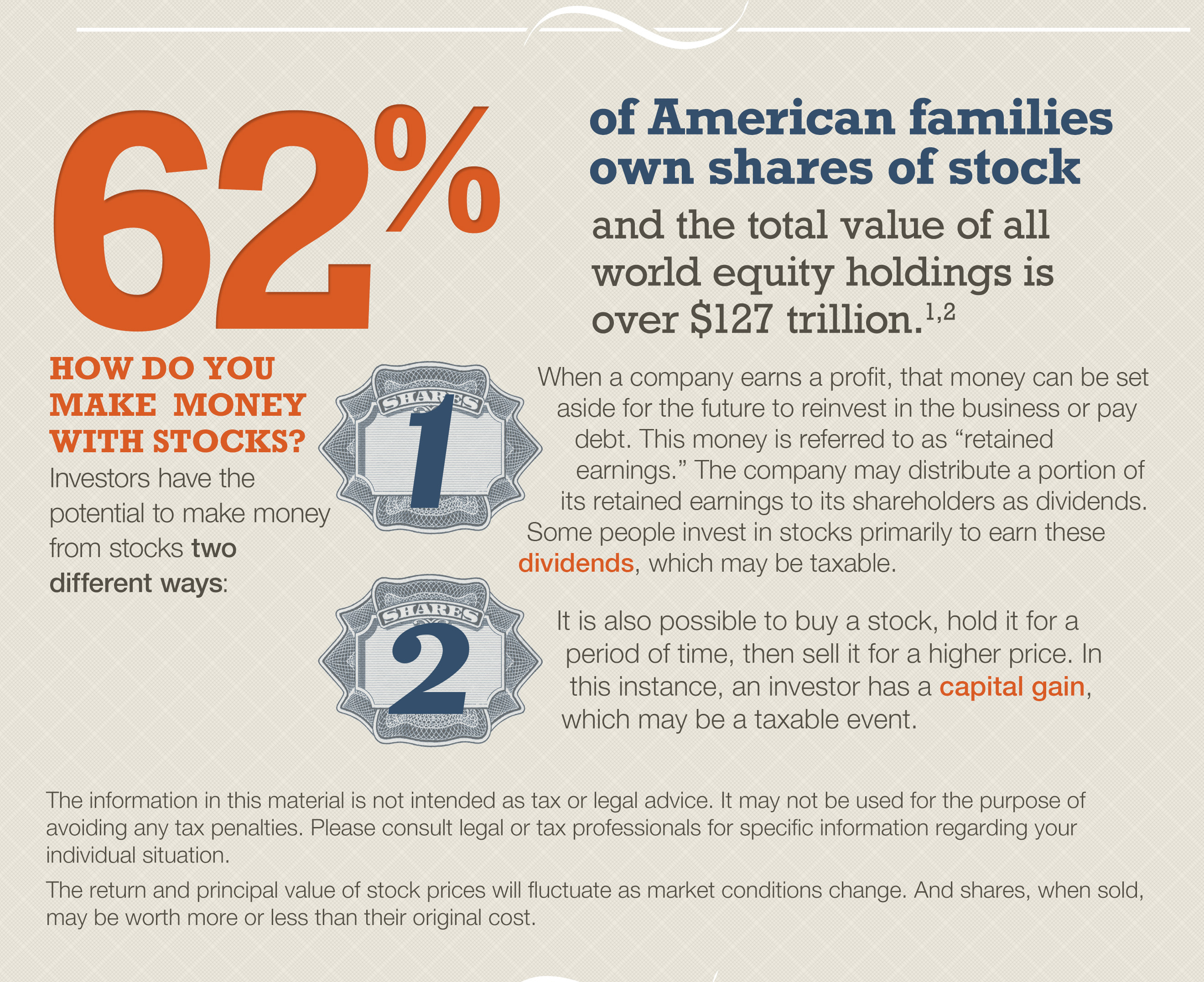
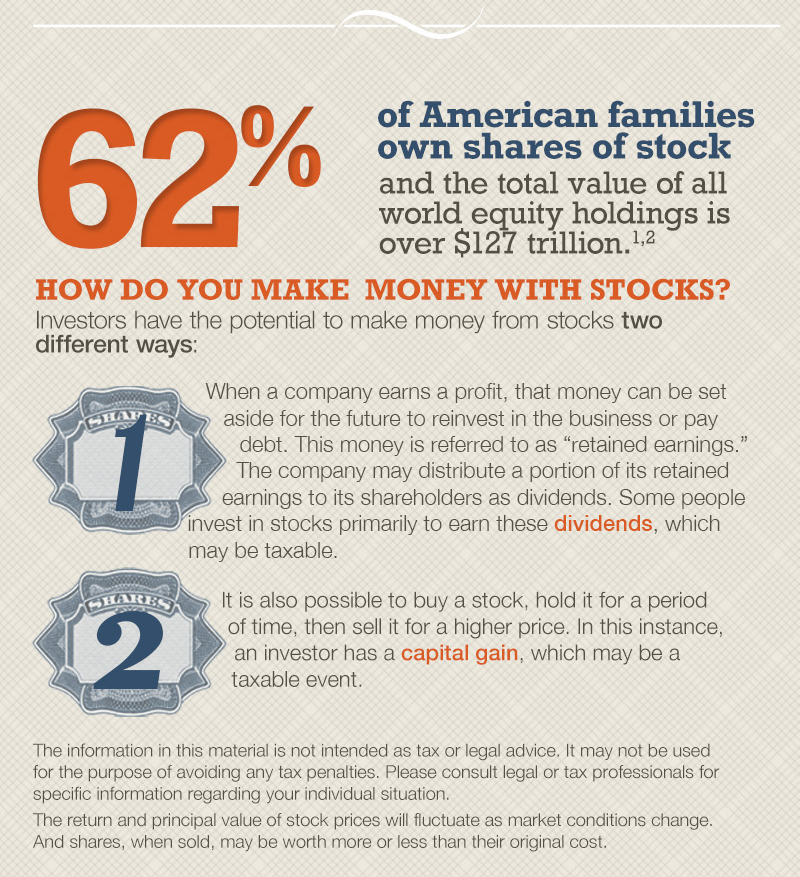
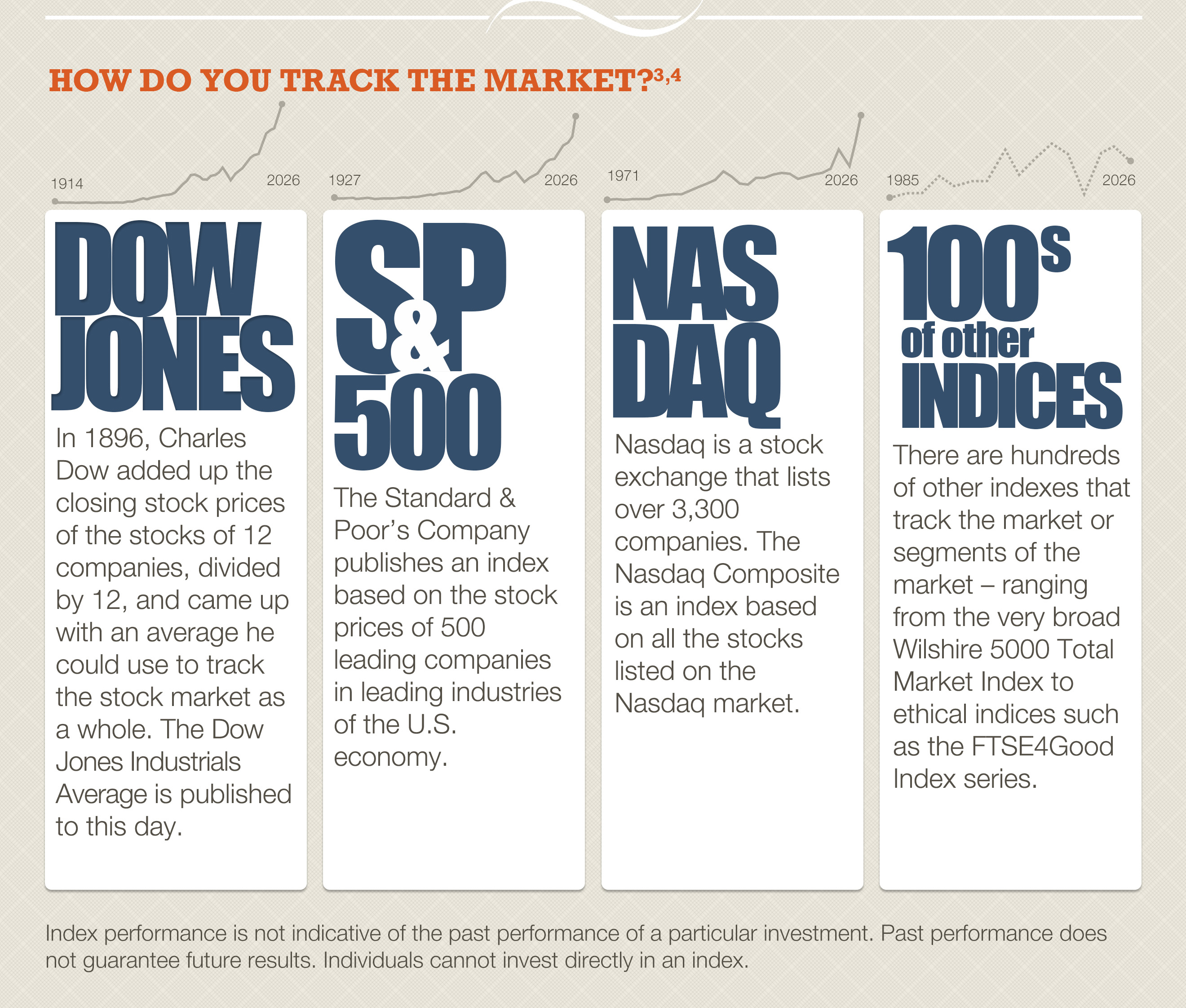
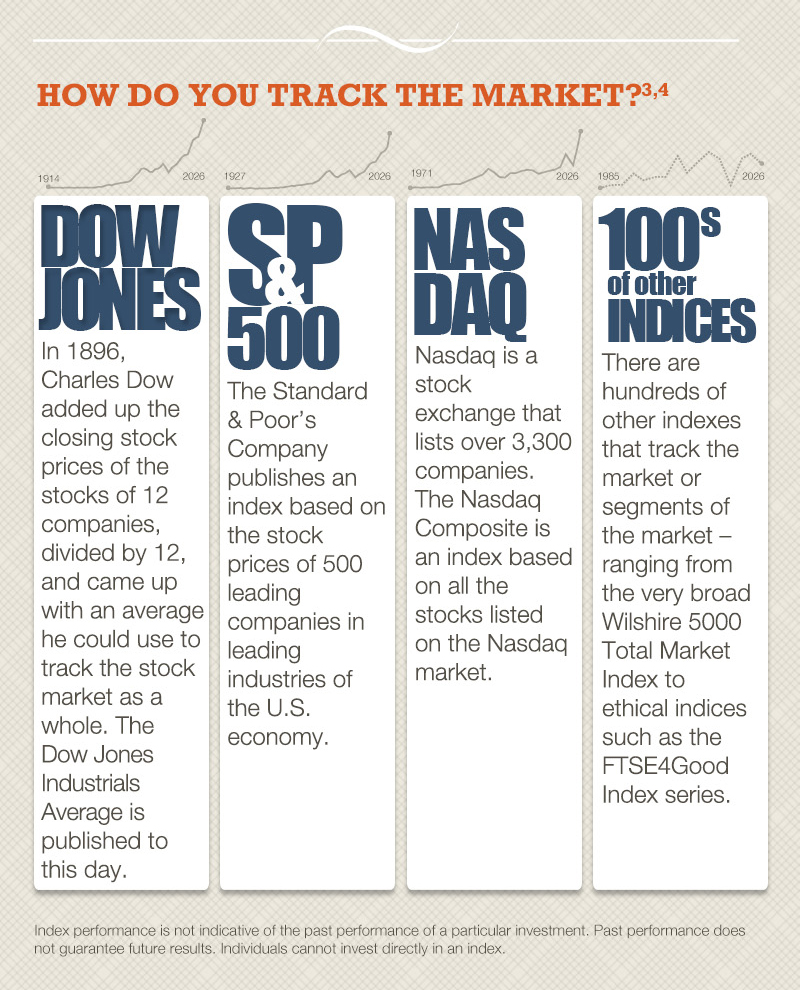
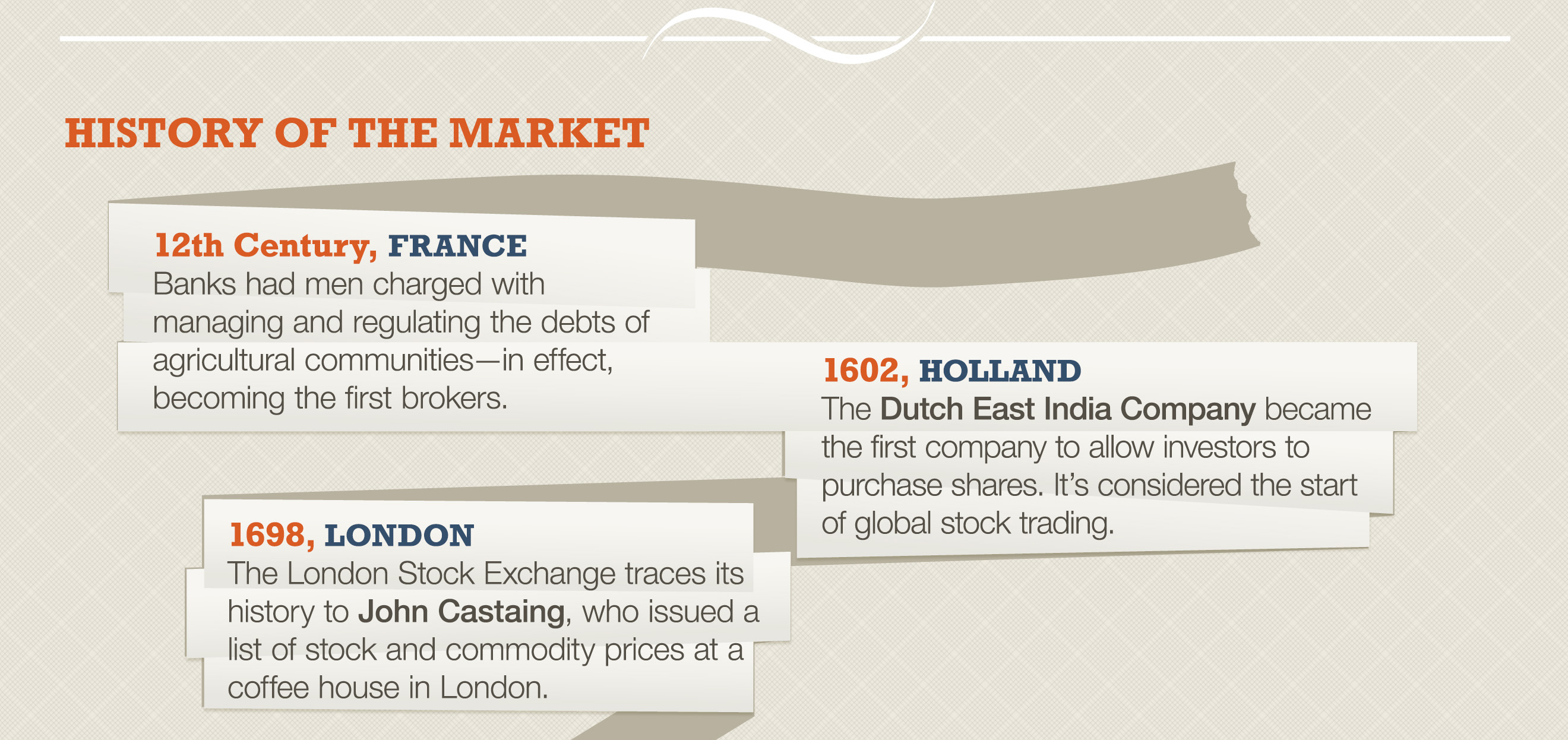
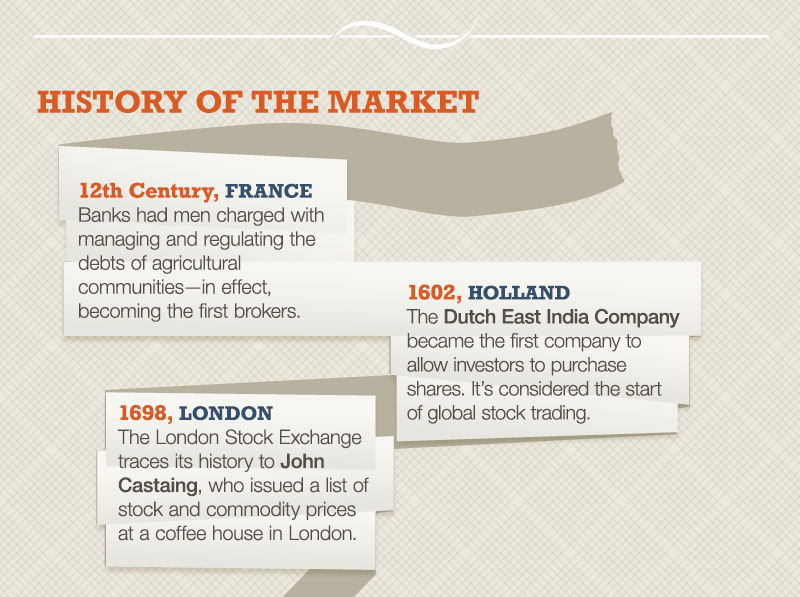
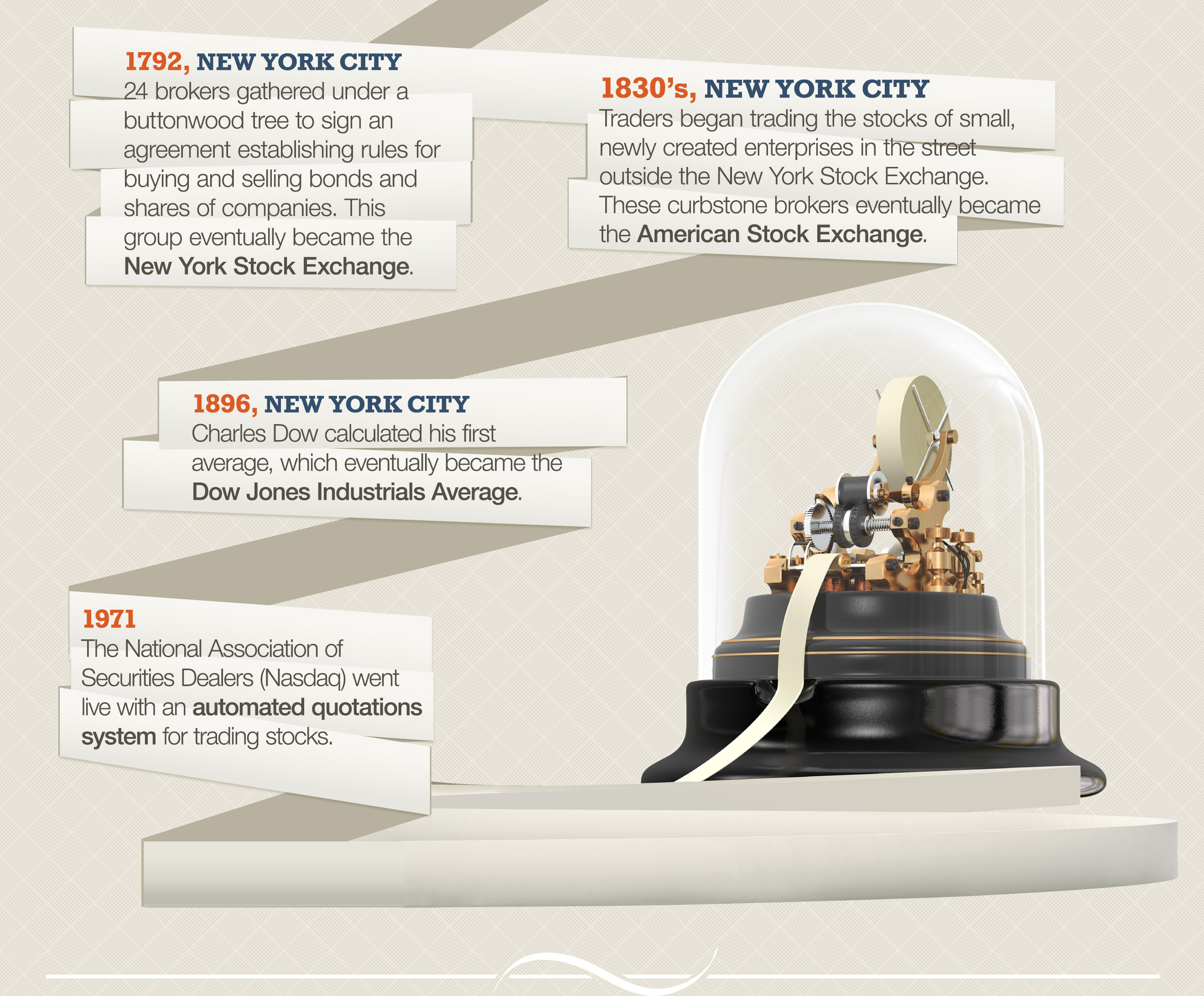
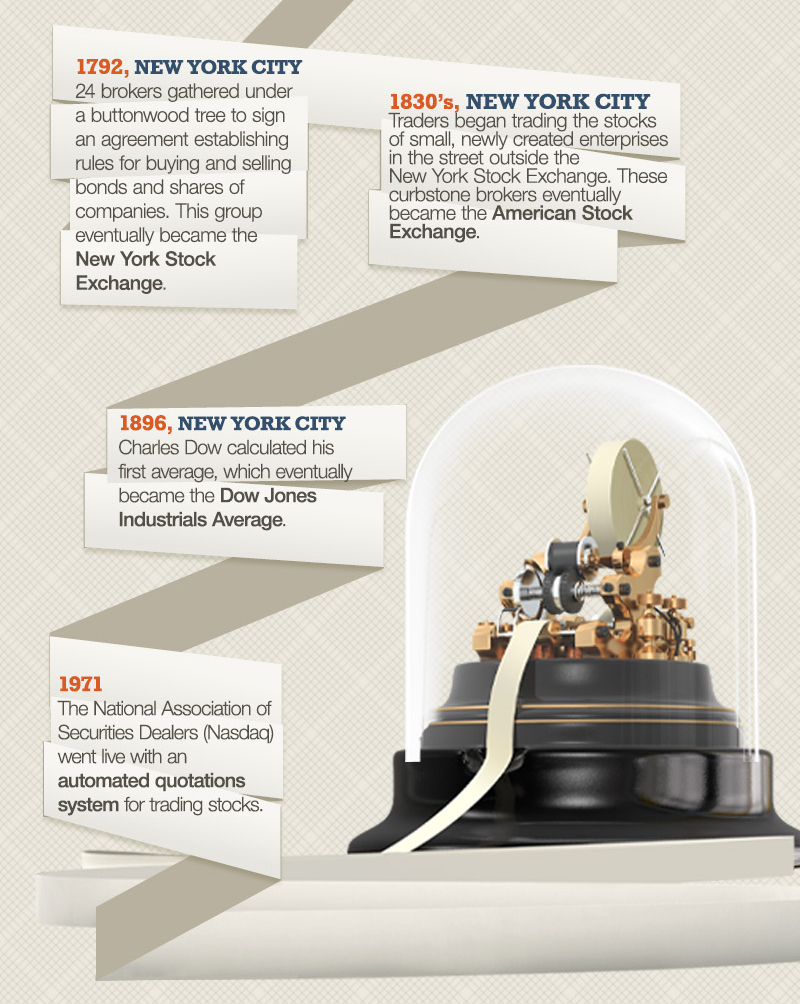
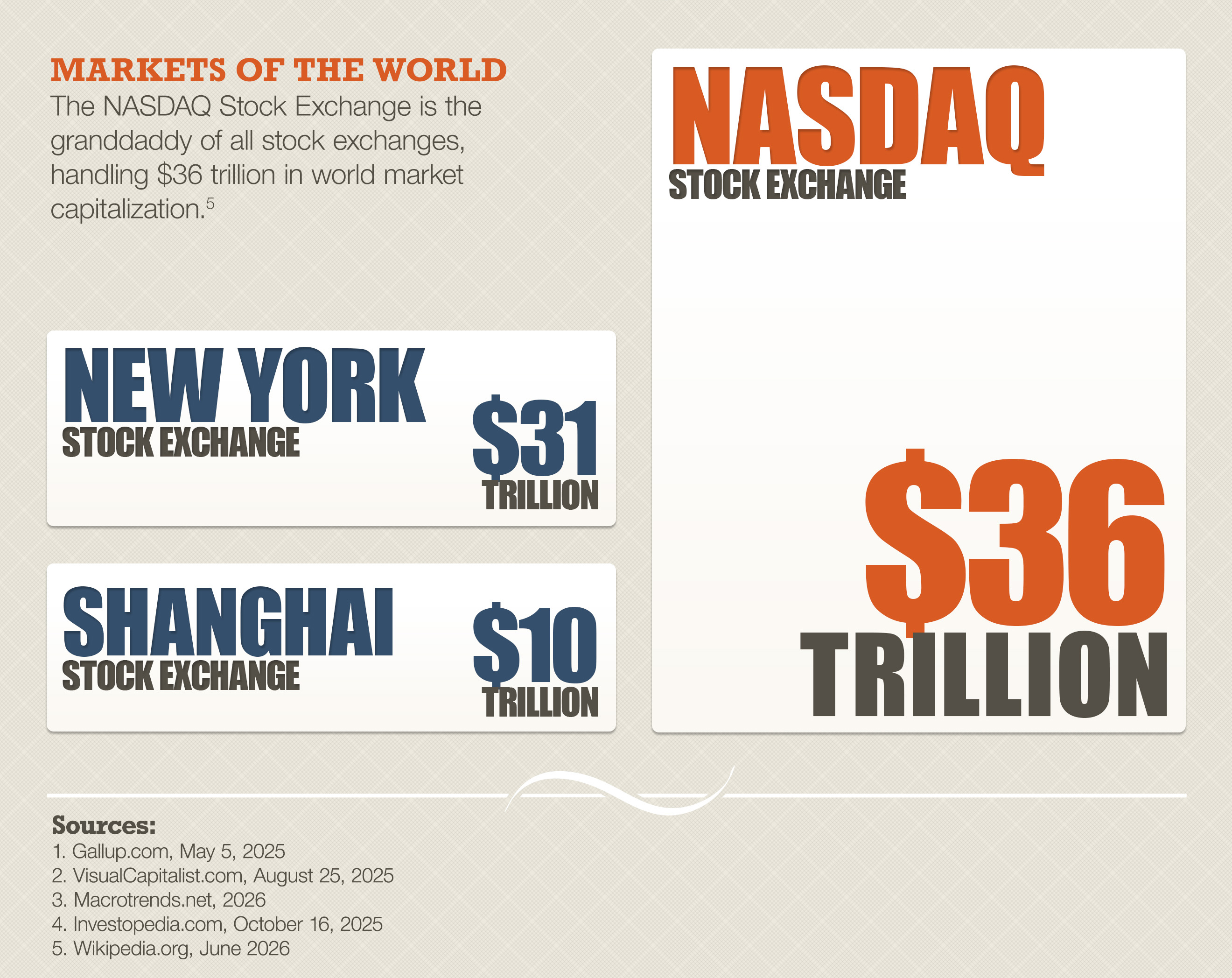
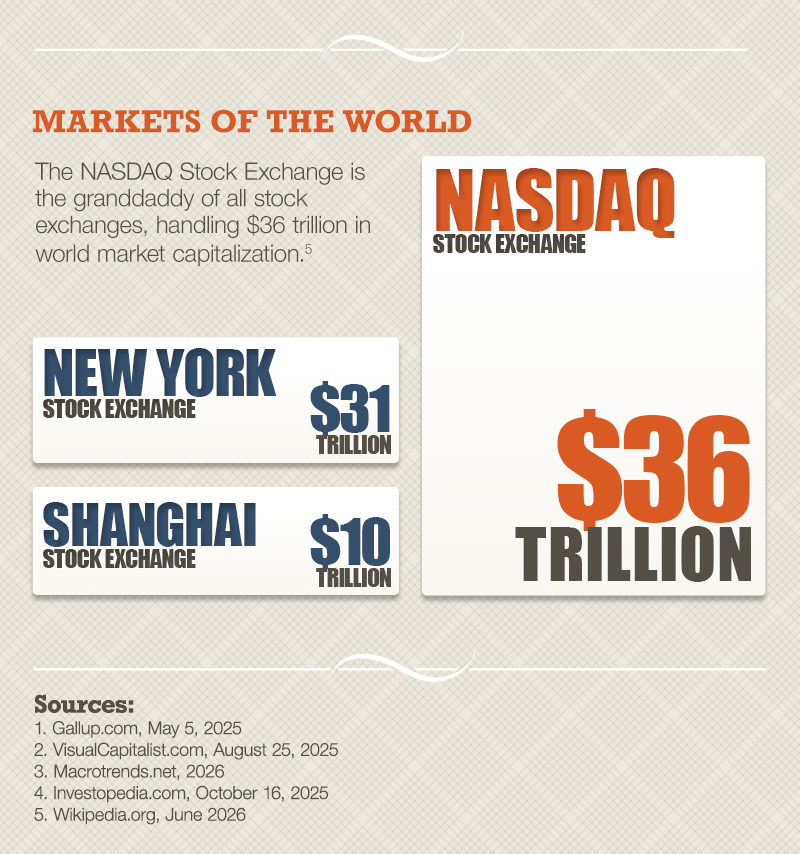
This is an educational infographic on how stocks work. It has seven sections on a blue background. The title reads: How Stocks Work.This is an educational infographic on how stocks work. It has seven sections on a blue background. The title reads: How Stocks Work.The first section, titled Initial Public Offering, explains that in an IPO a company divides itself into pieces called shares, which represent ownership in the company. These shares are then sold to investors as stocks. Shareholders are partial owners who can vote for the board of directors. Traditionally, shareholders received paper stock certificates, but today shares can be held electronically by brokers. The first section, titled Initial Public Offering, explains that in an IPO a company divides itself into pieces called shares, which represent ownership in the company. These shares are then sold to investors as stocks. Shareholders are partial owners who can vote for the board of directors. Traditionally, shareholders received paper stock certificates, but today shares can be held electronically by brokers.The second section, titled How Do You Make Money with Stocks, outlines two ways investors can potentially earn money. The first is dividends, when a company distributes a portion of retained earnings to shareholders. The second is capital gains, when a stock is bought, held, and later sold for a higher price. The section notes that dividends and capital gains may be taxable events. It notes that 61% of American families own shares of stock and that the total value of world equity holdings is $116.78 trillion.The second section, titled How Do You Make Money with Stocks, outlines two ways investors can potentially earn money. The first is dividends, when a company distributes a portion of retained earnings to shareholders. The second is capital gains, when a stock is bought, held, and later sold for a higher price. The section notes that dividends and capital gains may be taxable events. It notes that 61% of American families own shares of stock and that the total value of world equity holdings is $116.78 trillion.The third section, titled How Do You Track the Market, describes stock market indices. It explains that the Dow Jones Industrial Average began in 1896, when Charles Dow averaged the stock prices of 12 companies. The S&P 500 tracks 500 leading U.S. companies. Nasdaq is a stock exchange listing more than 3,300 companies, with the Nasdaq Composite index covering all of them. It also mentions hundreds of other indexes, such as the Wilshire 5000 and FTSE4Good, which track broad markets or specific sectors.The third section, titled How Do You Track the Market, describes stock market indices. It explains that the Dow Jones Industrial Average began in 1896, when Charles Dow averaged the stock prices of 12 companies. The S&P 500 tracks 500 leading U.S. companies. Nasdaq is a stock exchange listing more than 3,300 companies, with the Nasdaq Composite index covering all of them. It also mentions hundreds of other indexes, such as the Wilshire 5000 and FTSE4Good, which track broad markets or specific sectors.The fourth section, titled History of the Market, lists key milestones. In the 12th century in France, banks began regulating agricultural debts. In 1602 in Holland, the Dutch East India Company became the first to sell shares, marking the start of global stock trading. In 1698 in London, John Castaing listed stock prices, beginning the London Stock Exchange. In 1792 in New York, 24 brokers signed the Buttonwood Agreement, which grew into the New York Stock Exchange. In the 1830s, curbside trading in New York led to the American Stock Exchange. In 1896, Charles Dow published his first average. In 1971, Nasdaq launched as the first automated stock quotation system.The fourth section, titled History of the Market, lists key milestones. In the 12th century in France, banks began regulating agricultural debts. In 1602 in Holland, the Dutch East India Company became the first to sell shares, marking the start of global stock trading. In 1698 in London, John Castaing listed stock prices, beginning the London Stock Exchange. In 1792 in New York, 24 brokers signed the Buttonwood Agreement, which grew into the New York Stock Exchange. In the 1830s, curbside trading in New York led to the American Stock Exchange. In 1896, Charles Dow published his first average. In 1971, Nasdaq launched as the first automated stock quotation system.The sixth section, titled History of the Market, continues the timeline with four milestones. 1792, New York City. Twenty‑four brokers gathered under a buttonwood tree to sign an agreement establishing rules for buying and selling bonds and shares of companies. This group eventually became the New York Stock Exchange. In the 1830s, New York City traders began buying and selling the stocks of small, newly created enterprises in the street outside the New York Stock Exchange. These curbstone brokers eventually became the American Stock Exchange. 1896, New York City. Charles Dow calculated his first average, which eventually became the Dow Jones Industrial Average. 1971. The National Association of Securities Dealers—Nasdaq—went live with an automated quotation system for trading stocks. The illustration shows an antique stock‑ticker device under a glass dome.The sixth section, titled History of the Market, continues the timeline with four milestones. 1792, New York City. Twenty‑four brokers gathered under a buttonwood tree to sign an agreement establishing rules for buying and selling bonds and shares of companies. This group eventually became the New York Stock Exchange. In the 1830s, New York City traders began buying and selling the stocks of small, newly created enterprises in the street outside the New York Stock Exchange. These curbstone brokers eventually became the American Stock Exchange. 1896, New York City. Charles Dow calculated his first average, which eventually became the Dow Jones Industrial Average. 1971. The National Association of Securities Dealers—Nasdaq—went live with an automated quotation system for trading stocks. The illustration shows an antique stock‑ticker device under a glass dome.The fifth section, titled Markets of the World, highlights global stock exchanges by market capitalization. The New York Stock Exchange is the largest at $25.15 trillion. The Nasdaq Stock Exchange is listed at $18.99 trillion. The Shanghai Stock Exchange is $7.24 trillion.The fifth section, titled Markets of the World, highlights global stock exchanges by market capitalization. The New York Stock Exchange is the largest at $25.15 trillion. The Nasdaq Stock Exchange is listed at $18.99 trillion. The Shanghai Stock Exchange is $7.24 trillion.
 

Related Content

IRA Withdrawals that Escape the 10% Tax Penalty

IRA Withdrawals that Escape the 10% Tax Penalty

The list of IRA withdrawals that may be taken without incurring a 10% early penalty has grown.

Can I Create a Roth if I’m Over the Income Limit?

Can I Create a Roth if I’m Over the Income Limit?

Use this article to start conversations about the “backdoor” Roth IRA strategy.

Insuring Your Business With a Buy/Sell Agreement

Insuring Your Business With a Buy/Sell Agreement

It may help your business be better prepared in the event of the death of a principal or key employee.


Have A Question About This Topic?


Thank you! Oops!

Financial Aid for Students 101

Help your college-bound child explore scholarships, grants, and more with this article on paying for higher education.

Test Your Estate Strategy Knowledge

Estate management can help ensure that your assets are transferred according to your wishes while managing tax issues.

Retirement Plan Choices for Small Businesses

Retirement choices can feel intimidating. Choosing the right strategy can make all the difference.

View all articles

Comparing Investments

Compare two different scenarios side by side to see how they stack up over time.

How Compound Interest Works

Explore how compound interest can grow your money over time with this interactive tool.

Assess Your Life Insurance Needs

Estimate how much life insurance coverage may be appropriate for your situation.

View all calculators

Saving for College 101

Here's a crash course on saving for college.

Surprises

Making the most of surprises is a great reason to work with us.

Rightsizing for Retirement

What does your home really cost?

View all videos